Showing posts with label CTA. Show all posts

Thursday, June 2, 2011

Transit authorities discuss ways to fix the CTA


L-R: Schlickman, Renn, Wisniewski, Robling, Bey

A debate on the future of Chicago public transit is an “El” of a good time

By John Greenfield

It’s a Tuesday night and Cactus Bar and Grill, 404 S. Wells, usually packed with stockbrokers from the Chicago Board of Trade, is instead filled with transportation geeks and urban planning wonks. They’re here for “Chicago Public Transit: On Track or Derailed,” organized by the Chicago Architecture Foundation. Participants will discuss the good, bad and ugly aspects of our local bus and train service, and propose ways to drag our outdated transit system kicking and screaming into the future.

The distinguished panel of experts includes Aaron Renn, who blogs about city planning at www.urbanophile.com; Lee Bey, ex-Sun Times architecture critic and deputy chief of staff for Mayor Daley, now head of the Chicago Central Committee, which brainstorms ways to improve the Loop; Christopher Robling, principal of the P.R. firm Jayne Thompson & Associates; Stephen Schlickman, director of the UIC’s Urban Transportation Center; and formerhttp://www.blogger.com/img/blank.gif Sun Times transportation reporhttp://www.blogger.com/img/blank.gifter Mary Wisniewski, now working for Reuters. Cultural critic and blogger (www.planetizen.com) Edward Lifson is moderating. Dressed in dark suits and skirt they look a bit out of place among the bar’s surfboards, stuffed swordfish and mural advertising a tiki hotel, but they’re sharing a pitcher of beer.

Ed Zotti, who writes the Chicago Reader column “The Straight Dope” under the nom de plume Cecil Adams, introduces the debate. Zotti’s recent Reader cover story (http://www.chicagoreader.com/chicago/ArticleArchives?author=863819) examines the upcoming $4 billion-plus renovation of the northern segments of the Red and Purple lines.

He argues that adding more stops and transfer points to the Purple Line north of Belmont and less south of Belmont, as well as re-routing the line to enter the Loop via the State Street subway as part of this rehab would improve the frequency and speed of service and alleviate crowding. However, it appears the CTA views the project strictly as a rehab of the existing infrastructure north of Belmont and is unwilling to consider major route changes or changes south of Belmont as part of the project. Zotti argues this is a missed opportunity.

“There’s four things we all can agree on,” continues Zotti. The first is the increasing importance of transit in Chicago – ridership on the Red Line recently surpassed its 1927 peak. Second, he says this is a city of disparate transportation needs – South Siders don’t have to worry about crowding on their end of the Red Line, but while trains serve the entire length of the North Side, the line terminates at 95th, five miles north of the city’s southern border. Third, there needs to be a more comprehensive approach to transit planning to allow for ambitious projects like creating a Circle Line to allow transfers between the various train lines a couple of miles outside the Loop. Fourth, there needs to be more transparency and openness in how these decisions are made, Zotti says.

Renn begins the discussion by asking the audience to “Imagine a public transit system that was a source of pride for residents.” Bey notes “Transit is this city is seen as the transportation of last resort.”

But Wisniewski says she is proud of Chicago transit. “Maybe it’s because I’m a transit geek but I take people from out of town to check out the CTA. I rode to every station in town for the Sun Times.”

Robling argues that “Service, service, service” should be the CTA’s priority, although he acknowledges, “In Chicago there’s a mandate for design because we’re the origin of modern design.”

Bey argues that design is key and South Side stations are sorely lacking in amenities. “At a nicely designed station you can buy a cup of coffee and drop off your dry cleaning and these businesses can be a revenue source for the CTA,” he says. “It would be great to put in something to make the Dan Ryan stations less bleak.”

Wisniewski agrees that making stations attractive and welcoming is important. “The 18th Street station in Pilsen has beautiful murals of Mexican life. This kind of thing isn’t very expensive and it gives you something to look at while you wait for the train.”

Next they discuss the merits of the CTA’s bus shelters. Schlickman says he was impressed to see J.C. Decaux, the street furniture company that maintains the shelters, shoveling them out the day after this winter’s snowpocalypse. “I find the shelters are OK, which in some cases is OK,” says Bey. But Renn finds the design of the shelters to be outdated and dull and argues, “The idea that they’re better than what we had before is a pernicious one. Mayor Daley understands we’re competing on a global level.”


To improve service on public transit, “We need to look into making it more difficult for cars to get into the city,” says Wisniewski. Schlickman proposes turning lanes of the Kennedy into “hot lanes” that would be reserved for buses as well as cars that pay a special toll.

Bey argues that bus rapid transit is an incomplete solution to the city’s transit woes. “If I’m at 120th and Indiana what does that do for me?” Wisniewski replies, “It doesn’t fix the entire system but it would help solve the problem of all our rapid transit being in a hub-and-spokes configuration instead of a grid. We were offered over $100 million in federal funding to test four bus rapid transit routes, but the city didn’t quite get its ducks in a row in time to take advantage.”

Robling calls for combining the CTA with the Pace suburban bus system and the Metra regional rail system and creating a unified fare structure. “We haven’t done this yet because we have nutso cognitive thinking in this city.”

Wisniewski says that improving transit is going to require bold, sometimes unpopular actions from politicians. “Mayor Daley has sometimes been good at making bold decisions like when he carved up Miegs Field to create Northerly Island.”

Lifson reads a question from the audience, “Is it possible to fix transit without fixing neighborhoods?” “Good question,” responds Bey. “Parts of the South Side have been depopulated.” But Schlickman notes that the RTA has studied the possibility of extending the Red Line to the far South Side and has determined that it would be the most worthwhile expansion of the CTA.

Another question form the crowd is, “Any advice for Rahm Emmanuel?” Bey responds, “The mayor of Chicago has to ride the CTA to really experience it. Daley didn’t do this.” Wisniewski says, “I would encourage him to think small and pay attention to details that affect the everyday transit rider’s experience, but also look at the big picture and think about everything that transit can be.”

Why is the Red Grand stop rehab taking so long?


By John Greenfield

[This piece also runs in Time Out Chicago magazine, www.timeoutchicago.com.]

Q: It seems like the CTA Red Line’s Grand station reconstruction is taking forever. What’s the holdup?

A: While the on-train announcement for this stop used to cheerfully declare, “This is Grand,” things have has not been so rosy for this rehab, coordinated by the Chicago Department of Transportation.

Work started in early 2008 and was supposed to be finished last year, but CDOT has pushed the target back to late 2011, says spokesman Brian Steele. At just under four years, that would be about twice as long as the recent rehab of the Red Line’s Jackson station, and about the same duration as the reconstruction of the Red Line’s Chicago stop, but Steele says those were much simpler jobs. “The Grand/State project is the most complex and challenging station reconstruction project the department has tackled in the last decade,” he explains.


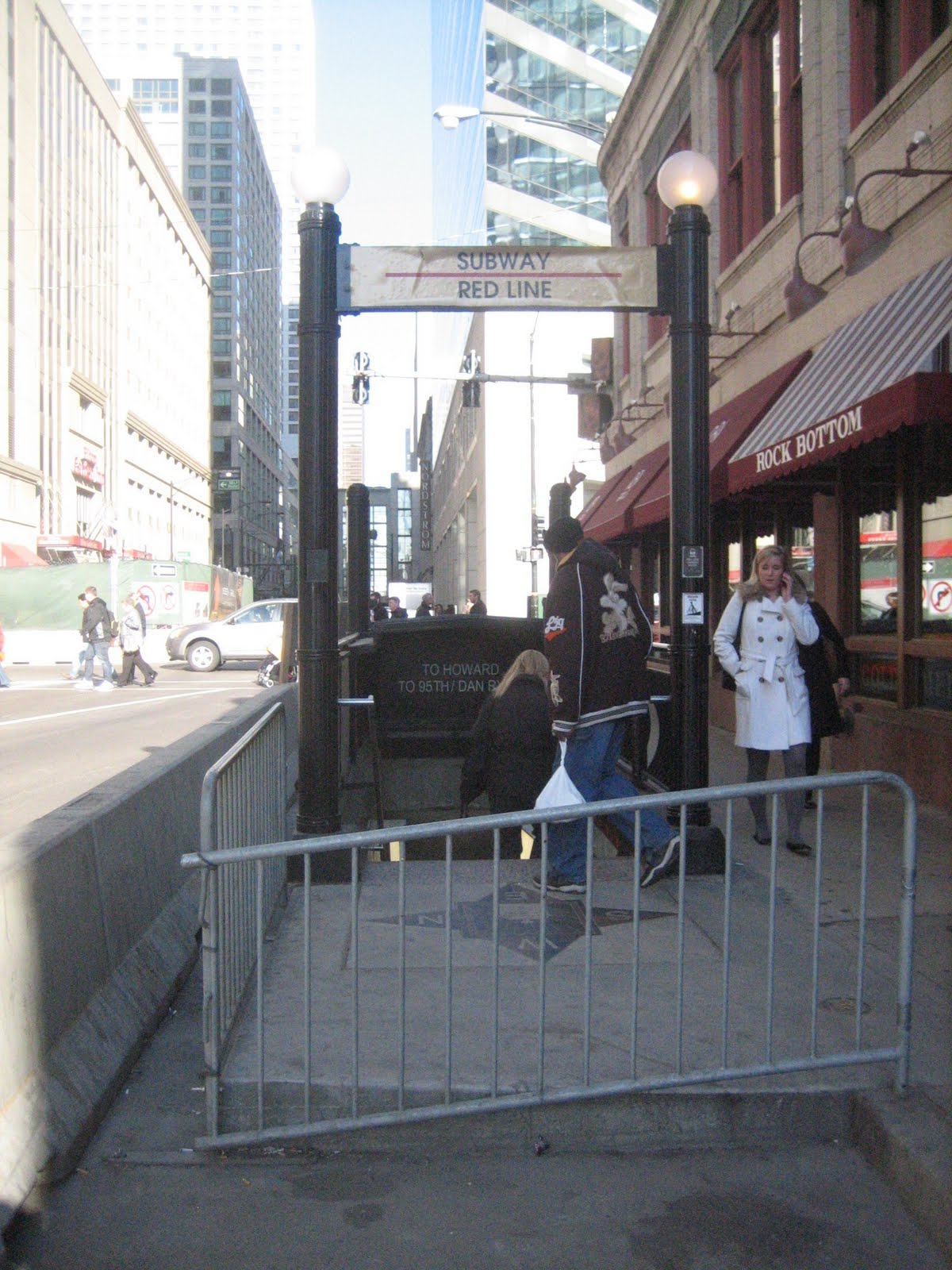
The location, directly below the Grand/State intersection and flanked on all sides by the foundations of buildings like the Rock Bottom Brewery, complicated matters, and there have been unforeseen hassles. Old blueprints for the site didn’t show the location of some utility lines, last year striking construction workers delayed the project about a month, and several times during the last two winters, work has slowed or stopped because of harsh weather.


On the bright side, Steele says the job is still within budget and the station will feature a much bigger mezzanine; more turnstiles, escalators and elevators; a large indoor bicycle rack; and a bike ramp to make it easy to roll your ride from the street to the station.


Wednesday, June 1, 2011

Interview with Jairo Naranjo, CTA bus driver


by John Greenfield

Jairo Naranjo’s piloted CTA buses for a decade, currently driving the #80 Irving Park Express from Harlem Avenue to the lake. He recently won first place in the Customer Service Challenge at the international Bus Roadeo and he’s got tips for how to become a black belt in using the CTA effectively.


What does customer service mean to you?


Respect. Dealing with the general public you’re getting different attitudes at all times. Some people are not going to be nice and some of them are going to be really nice. It means keeping a clear mind and making sure you’re always smiling, always saying hello. The minute I open my doors, the first thing I do is acknowledge my customers. It’s like, “Welcome aboard to my bus.”

We as operators get a bad rap for being mean. We’re not mean. We enjoy what we do. Traffic can make things a little hectic for us some times and safety is always our first priority but we always try to acknowledge the customer as a person.

What do you do if someone tries to get on without paying, like sneaking in through the back door?

First stop that passenger and let them know the entrance is through the front door. Then you request the fare. We’re required to ask for payment three times. If they still refuse to pay, our procedure is to notify our control center and go from there. They might call the police to the scene, or they just might let it go.

It can get kind of scary sometimes because customers can get irate and out of hand. You want to request the fare but you want to do it kindly and not just demand it. You don’t want to say, “Hey! You need to come over here and pay your fare.” You need to say, “Sir or ma’am, the fare’s $2.25.” If you treat ‘em with respect you’re going to get the respect right back.

What are some of the highlights of the Irving Park route?


What I like best about Irving Park is it’s a double-lane street so the traffic moves very well. If there’s a little bit of congestion you can kind of get out of it. Not at all times – when you get Cubs traffic you’re pretty much stuck.

Do you ever get rowdy or drunk Cubs fans on your bus?


You can get rowdy people on your bus some times and it’s your job as the driver to try to maintain control. But we’re good at maintaining control of our buses – we have a little bit of an edge at crowd control. After ten years as a bus driver you can identify the people who are going to get on and be a little rowdy, and there’s ways of handling it.

What’s the best way to become a more effective CTA customer?


The best new tool is the bus tracker, which you can get through the CTA website. It’s the most efficient way to get from point A to point B. For us, as operators, we appreciate it when people have their fares ready when they board the bus – it makes things run more efficiently. The Chicago Card Plus is a quick way to pay - you can have it linked up to your credit card so it’s easy to keep it loaded.”

Do you ever have problems with customers talking your ear off when you’re trying to drive the bus?


There’s nothing wrong with having a small conversation with a bus driver. But you have to remember that safety’s our biggest concern. If you’re talking to an operator you’re distracting them. So, for instance if you want to ask the driver a question, it’s a good idea to wait until the bus is stopped at a light.

Do you have any interesting characters who ride your bus?


I get this one customer all the time. He’s an elderly gentleman named Stanley. He’s always talking and he’s always complaining about his meals and his nursing home, stuff like that. But he knows my name and he’s always a friendly face. Every time I see him I start to chuckle cause I already know he’s gonna talk my ear off to the end of the line.

Where’s he going on the bus?


I always pick him up at Kimball and he gets off at Clark at that nursing home near Graceland Cemetery. He takes his meals over at Kimball. It’s the weirdest thing – he always catches my bus, no matter what my schedule is. It’s like he knows my schedule – he’ll be there at that certain time.

Driving a route for so many years, these passengers get to know you on a first-name basis and I know a lot of my customers’ names as well. It becomes a relationship. It’s a good thing because if you get to a stop and that person’s not there you kind of look to the side and they might be running for the bus. You stop and wait for them and they appreciate that common courtesy.

So if you become a regular on a CTA bus the driver may pick up on your habits. The driver can’t delay the bus or make unofficial stops, but they can nudge the timing a little bit to make sure regulars don’t miss the bus?


Sure, any time we see anybody running for the bus we try to accommodate them. We don’t want anybody to miss the bus and be late for work. There are times we might not see someone and we might drive away, and that might be reported as a “pass-up” [deliberately not picking up a passenger]. But that’s not a pass-up. We’re not doing that intentionally. If we see them we’ll go out of our way to accommodate them.

I’ve been told there’s a poster up in the break rooms for CTA drivers that helps educate them about how to drive safely around bicyclists. On the other side of the coin, do you have any tips for bicyclists about how they can avoid conflicts with buses?

I did a video for the Chicago Department of Transportation called “Share the Road,” teaching bus drivers and cyclists how to operate safely around each other. We don’t mind sharing the road but what bicyclists have to realize is a bus is a big vehicle and it’s hard for us to stop it at times. When they’re dodging in front of us and breaking the rule of the road it doesn’t make things any easier on anyone.

I don’t know if you noticed this but we operators tend to pump our brakes – you ever hear that “hiss hiss” sound? – to notify you that we’re coming. It’s hard for you as bicyclists to hear if we’re coming since our newer buses are pretty quiet and some of you ride with earphones on.

Sometimes you get “leapfrogging” where a bus will pull up to a stop, a cyclist will pass them, and then the bus will pass the cyclist again. Is there a strategy you have to keep from trapping cyclists between the bus and the curb?


As a bicyclist you don’t want to get trapped in that triangle. The best thing to do is stay behind the back bumper and wait ‘til the bus makes his move. Sometimes it’s hard for us to see bicyclists behind us in our mirrors, especially on our right-hand side.

We try our hardest not to cause injury to anybody. Believe me, we don’t want that type of stuff in our head or on our records. It’s not a nice thing to live with.

Monday, May 2, 2011

Drink, don't drive, at Chicago's train-friendly pubs


by John Greenfield

[These write-ups also appeared in Time Out Chicago magazine, www.timeoutchicago.com]

Recent surveys show that Chicago has the highest gasoline prices in the country at $4.50 per gallon. That calculates to roughly four cents per ounce, the same price as Walgreen's Big Flats beer, $2.99 for a six-pack. Factor in the dangers of drunk driving, and it makes a lot of sense to take transit to taverns and spend the money you save on gas on beer instead. Here are some suggestions for interesting, off-the-beaten-path watering holes that are adjacent or a short walk from CTA, Metra and South Shore Line stations.

CTA O'Hare Line Harlem stop

Avant Garde
5241 N. Harlem Ave., Norwood Park
(773)594-9742

Just south of the Harlem Blue Line station, this black-windowed storefront, formerly Mario’s Café, houses a surprisingly sleek Bulgarian nightspot. Blood-red walls, plush black sofas and silver banquettes, plus abstract sculptural elements suspended from the, create an ambiance worthy of the bar’s name, while stylishly-dressed, dark-eyed young women kibbutz in Bulgarian over throbbing Eurodisco. To sample the cuisine, a mix of Mediterranean and Slavic influences, try a katino meze: a mix of fried chicken, pork and beef tongue with mushrooms, onions, pickles, garlic and feta. Wash it down with a Shumensko beer ($5) or a shot of rakia, a Bulgarian brandy.

And to top it off: A spiky-haired bartender juggles bottles and glasses ala Tom Cruise in “Cocktail.”

Metra's Milwaukee District North Healy stop


The Levee
4035 W. Fullerton Ave., Kelvyn Park
773-342-2808

A tree trimmed into the shape of a beer bottle standing beside this homey tavern is a sign you’ve found dive bar gold. The front room features a serpentine brass bar, while the walls of the lodge-like back room are decorated with antique tools and a series of Abe Lincoln prints. Teachers from nearby Kelvyn Park High stop by on Fridays for Heinekens, Coronas and free barbecue. Owner Warren Johnson is an ex-Marine who played semi-pro football with the Chicago Gladiators in the ‘70s. He shows off a scrapbook of vintage ads for gorgeous former proprietor Trudy De Ring, who performed burlesque under the stage name Radiana in the ‘30s.

And to top it off: The plush barstools are the most comfortable in the city, salvaged from skyboxes during the Soldier Field rehab.


CTA Pink Line Damen stop

Martin's Corner
2058 W. 22nd Pl., Pilsen
773-847-5515

This family-owned tavern has operated since 1951 on a back street of Pilsen, kitty-corner from the twin spires of St. Paul’s Church – current owner Bob Martin attended the adjacent Catholic school. A mix of the neighborhood’s Latinos and Anglos come to this sports pub for cheap burgers, chicken sandwiches and chops plus daily drink specials, like $4 pints of Spaten Octoberfest. The microbrew selection is impressive, including selections by Dogfish Head, Magic Hat and Delirium Tremens, plus Southern Tier’s Mokah stout on tap. Numerous Blackhawks photographs and jerseys autographed by Paul Konerko and Joe Montana, along with free pool, makes this a comfortable hang for local superfans.

And to top it off: A photo on the wall shows an elderly Rock Marciano playfully pummeling a young Muhammad Ali.

CTA Green Line's King Drive stop


Kozy Korner
641 E. King Dr., Woodlawn
773-833-2777

True to its name, this tavern is a relaxing oasis in rough-and-tumble Woodlawn, steps from the King Drive Green Line stop. In business since 1956, the bar features mirrors ringed with plastic roses, multiple portraits of Obama, and a large, old-fashioned lamppost in the middle of the room. Middle-aged and older men in Sox hats and Kangol caps drink bottles of MGD ($2.50) while sharply dressed ladies sip goblets of vodka and cranberry. The jukebox is well stocked with R & B dusties, and when “Honky Tonk” by James Brown comes on, women at one end of the bar start clapping along. There’s karaoke on Thursday nights with a prize for the best singer.

And to top it off: Ex-Chicago Defender gossip columnist Cliff Pierce is a regular.


South Shore Line Hegewisch stop

South Shore Inn
13611 S. Brainard Ave., Hegewisch
(773)646-0350

This shot-and-a beer joint, located across the street from a South Shore Line stop and catering to commuters and tradesmen, seems pleasantly frozen in time. The grandparents of current owner Dean Ubik bought the building in 1921 and it operated as a speakeasy during Prohibition, when “working girls” rented rooms upstairs. The tavern, last rehabbed in 1949, features sparkly gold vinyl booths and a gorgeous art deco bar with portals filled with knickknacks like antique radios and toy cowboys and Indians. Michelob, Bud Light and Amber Bock are on tap ($1.55/pint), and vintage ads for the train line and a stuffed deer head adorn the walls.

And to top it off: A collection of black-and-white family photos on the wall including pictures of Ubik’s mom’s bowling team and a local bocce league.


Mugs Bunny
13401 S. Baltimore Ave., Hegewisch
(773) 646-4560

This bare-bones dive, in operation since 1978 on Hegewisch’s main drag, probably takes the prize for Chicago’s most irresponsibly named bar. The grinning cartoon rabbit hoisting a brew on the sign threatens to lure children into a lifetime of boozing, although owner Keith Essary says he’s had no complaints. That said, this is a friendly place to sip dollar PBRs or down $5 Vegas bombs (Crown Royal, schnapps, cranberry and Red Bull) with local factory workers and police officers. The jukebox plays a mix of rock, country, punk and hip-hop, and the wood-paneled back room features darts and a Corvette pinball machine.

And to top it off: Mugs Bunny is home to one of the city’s few shuffleboard tables.

Friday, February 11, 2011

The CTA's Ski and Ride program


by John Greenfield

[This piece also ran in New City magazine, www.newcity.com.]

Although Chicago is a superior city in most respects, I suspect that Minneapolis, a much colder, snowier town, is actually a place where more people enjoy the winter. This is because residents of the Twin Cities, with their strong Scandinavian heritage, know how to embrace the season, donning cheerful woolen clothing and diving into cold-weather fun like sledding, skating and snowball fights, followed by large quantities of glögg.

Here in the Windy City, most people dress in black and view winter as something to survive, not celebrate. They see it as a series of hassles and indignities: freezing el platforms, slushy sidewalks, salt-choked air and parking spots selfishly reserved with old furniture.

Not me. I’ve got a two-pronged strategy to make the most out of cold weather. The first is indoor coziness and/or winter denial: gastropubs, rock clubs and hot tubs; Hala Kahiki and the Garfield Park Conservatory. As I type this, I’m sitting in the ninth-floor winter garden of the Harold Washington Library, surrounded by leafy trees and ivy-covered walls.

My second tactic is making sure to get plenty of outside time in the brilliant winter sunshine. I bundle up and ride my bike daily, and take long walks around Logan Square after fresh snowfalls create an atmosphere of hushed beauty. One of these days I’m going to get up early, pedal to the Belmont Harbor peninsula and do (clumsy) yoga as the sun rises over the steaming water—I mean it.

So I decide to strike a longstanding item off my winter to-do list: cross-country skiing along the lakefront with a friend. Since I don’t own a car, I tie up my two pairs of thrift-store skis and poles with inner tubes, sling them on my shoulder and hoof it to the Logan Square train station to catch the #76 Diversey bus east. I get plenty of funny looks as I wait for my ride, but the sweet-tempered bus driver doesn’t object to my outlandish cargo. “Have a fun time,” she smiles.


After I transfer to the Halsted bus and pick up my friend in Lakeview, we take the Roscoe underpass to the Lakefront Trail, clip into the bindings and start shushing north, flanked by high-rises. We come to the Waveland Clock Tower, a Gothic gem, and enter the Marovitz Golf Course, with its refreshingly wavy terrain and stately spruce. At the north end of the links, a couple of homeless guys have pitched tents.

We unclip and scramble over a fence to exit the links, then ski over to Montrose Harbor and Cricket Hill, where we “herringbone” our way to the summit, swarming with pint-size sledders. Zooming down the slope on skis is a rare treat in this pancake-flat town.


On our way back we take a trail that hugs the lake, enjoying breathtaking views of the bleak expanse. A crowd of ducks and geese bob among the ice floes—they don’t seem to mind the cold. After completing our Nordic skiing excursion, we celebrate at Ann Sather’s with an après-ski feast of Swedish meatballs and cinnamon rolls, toasting our trip with cups of hot coffee. Take that, winter depression.

Sunday, January 2, 2011

Bicycling, transit and parks highlights of 2010

Chicago Cross Cup (photo by Luke Seemann, www.chicagobikeracing.com)

by John Greenfield

[These listings are from New City magazine's Top 5 and Best of Chicago issues, www.newcity.com.]

Top 5 Local Bike Stories

Emanuele Bianchi proposes Chicago Velo Campus velodrome complex at former U.S. Steel site

Drunk drivers who intentionally strike cyclists in Brookfield get a slap on the wrist

Rising popularity of the zany Chicago Cross Cup cyclocross racing series

Active Transportation Alliance launches Crash Support Hotline

Daley’s impending retirement has cyclists hoping for a bike-friendly new mayor


Top 5 Chicago Park District Stories


Lush, twenty-seven-acre Palmisano (aka Stearns Quarry) Park dedicated in Bridgeport

View from the hill in Palmisano Park

Legendary commissioner Margaret Burroughs, founder of DuSable Museum, dies at 95

Park District and “starchitect” Jeanne Gang unveil the Northerly Island Framework Plan

Pristine new 41st Street Beach opens with breathtaking views of the Loop

City Council approves $41 million in TIF money for 2011 Park District capital projects


Top 5 Chicago Transit Authority Stories

CTA uses Homeland Security funds to install 3,000 new security cameras system-wide

A civilian dons a driver’s uniform and steals a bus from the 103rd Street garage

New 5000-series prototype rail cars with NYC-style aisle-facing seats debut

CTA pilots the long-awaited Train Tracker system


Study shows that five percent of Free Rides for Seniors passes now in use belong to dead people


Best news for Chicago bicycling in 2010

In this economy it can be tough to find money for green transportation projects. But in October Governor Quinn announced roughly $49 million in federal funds will go to state bicycling initiatives, largely in Chicagoland, via the Illinois Transportation Enhancement Program. $2.8 million will go towards the Calumet-Sag Trail, a 26-mile path paralleling the city’s southern border. The grant will also bankroll an expansion of the Burham Greenway, the short-but-sweet multiuse path on the Southeast Side. And the CDOT will use ITEP funding to pilot a mile-long Dutch-style “cycle track,” separating bike traffic from cars, on South Stony Island Avenue.

Burnham Greenway (photo by Jennifer from General Carlessness, www.jmd1125.blogspot.com.)

Best thing to name after Richard M. Daley

A bike racing track on Northerly Island

As “Cyclist-in-chief,” Mayor Daley’s legacy is a mixed bag. He gets credit for all the federally-funded lanes, paths and racks that materialized during his tenure, the good work of his eponymous Bicycling Ambassadors, and more. But under Daley, City Hall was reluctant to put cycling in the city budget, resulting in the fizzled Open Streets ciclovia; the anemic B-cycle bike share network; the bike parking famine that resulted after 30,000 meters were uprooted; and other disappointments. Still, a bike shop owner acquaintance tells me the mayor actually rides a bike here, early in the morning on the Lakefront Trail, and it seems like the his heart was in the right place when it came to supporting cycling. So why not remember him with a velodrome on Chicago’s peninsula park. At least it will justify his bulldozing Meigs Field.

Northerly Island (Photo by David Kee, www.ecovelo.info.)

Best public beach

Montrose Beach

All Chicago beaches have their pros and cons but Montrose Beach has a nearly perfect storm of cool attributes. It’s far enough away from Lake Shore Drive that you can’t hear traffic. The vibe is blue-collar and family-friendly, free of the douchebaggery that plagues North Avenue and Oak Street beaches. You can buy tasty Mexican food from the snack bar, elote carts and strolling peddlers on the sand. The water is pristine and kayaks are available for rent. A stroll down the pier provides an awesome skyline view, while the adjacent Magic Hedge nature sanctuary offers bird-watching and gay cruising opportunities. There’s something for everyone.

The lakefront between Montrose and Lawrence


Best new public park

Adams-Sangamon Park

Many Chicago parks are merely utilitarian: flat rectangles of grass broken up by a few baseball diamonds and basketball courts. So it’s exciting when the Park District thinks outside the box and creates a unique green space. Opened last summer in the shadow of the Sear Tower, Adams-Sangamon Park features a huge, groovy playground with drawbridges and climbing nets, a dog run and man-made hills covered with native grasses. Boulders and seating cubes are strewn about in pleasingly random patterns. The coolest element? Huge, silver gateways shaped like crooked picture frames, spraying refreshing mist in hot weather.

Adams and Sangamon

Wednesday, December 29, 2010

What's with the bluish lighting on CTA buses?


by John Greenfield

[This article also runs in Time Out Chicago magazine, www.timeoutchicago.com.]

Q: What’s up with the weird blue lighting inside CTA buses in the past year or so (and now in some CTA train cars as well)? It looks like if you took some dirty combs in there, they’d come out clean! — Joe Bogdan

A: That bluish glow inside some buses and trains comes from new LED lighting that has replaced fluorescent bulbs, according to CTA spokeswoman Wanda Taylor.

In fall 2009, the agency added 58 articulated hybrid buses, bankrolled by federal stimulus money. The new vehicles are less polluting, quieter and a smoother ride than conventional buses, and the new LEDs on these vehicles are a greener, lower-maintenance choice since there are no bulbs to change, Taylor says.

This year the agency has also been testing interior LED lighting on its rail system, although the higher cost of the LEDs and difficulty keeping a steady voltage on the trains may prevent them from changing the lighting system-wide.

The CTA is also considering adding color-coded LEDs on the outsides of train cars, Taylor says, so that when you’re standing on, say, the Fullerton platform it will be obvious whether a particular train serves the Red, Brown or Purple Line.

Thursday, December 23, 2010

Rough ride: the transit agencies tighten their belts


By John Greenfield

Photos by Gilbert Feliciano

[This article also ran in New City magazine, www.newcity.com.]

On an icy Monday night a handful of citizens has braved to cold to visit the Loop office of the Regional Transit Authority, which sets the budgets and provides oversight for CTA, Metra and Pace. They’re here for the last of several public hearings on the RTA’s 2011 financial plan. Several of the attendees are transit activists who show up regularly for these kind of meetings. There are also a few people with disabilities here, and there’s a sign language interpreter at the front of the room.

Joseph Costello, the RTA’s mild-mannered executive director, starts the hearing by explaining how the sour economy has impacted the three transit agencies. Reduced consumer spending means the RTA’s largest source of public funding, a 1.5 percent cut of Cook County sales tax receipts plus .5 percent of receipts from the five collar counties, dropped from about $750 million in 2007 to roughly $650 in 2010. Meanwhile, the cash-strapped state government has been delaying its payments to the RTA, making it tough for the transit oversight body to pay its own bills.

Joseph Costello

In response to these funding problems Costello says CTA, Metra and Pace are making financial sacrifices. 2011 budgets are smaller, there have been over 1,000 employee layoffs and, like eighty percent of transit agencies around the country, they’ve cut service and hiked fares. On the bright side, while regional transit service has been reduced by three percent, ridership is only down by one percent, he says.

Although the three agencies will have smaller capital budgets next year, Costello says the RTA is studying the condition of tracks, stations and other infrastructure for future improvements. “The engineers tell us if we were to rebuild our regional transit system from scratch it would cost us $52 billion, so it’s a valuable asset we should invest in and preserve,” he says.

When the floor is opened to comments Heather Armstrong, who uses a wheelchair, argues that Metra and Pace offer cleaner buses and trains, and better customer service than CTA. “You should give the CTA train system to Metra and the bus system to Pace,” she says.

Charlie, a senior with a crew cut who’s a member of the transit workers union and the transit advocacy group Citizens Taking Action says he’s worried about future layoffs. “The union drivers ain’t got no contract,” he says. ‘Will there be three, four, five thousand more layoffs next year?”

The City of Evanston’s Matt Swentkofske says, “Evanston is very blessed to be served by CTA, Pace and Metra.” He asks Costello for help getting three rail viaducts rebuilt in the village. “Let us know what kind of lobbying we can do.”

Kevin Peterson, a young man in fatigues and combat boots who says he’s with the group Citizens Against Terrible Transit Service, rants against faulty fare cards, bus drivers who refuse to lower access ramps, and the RTA’s efforts to end the free rides for seniors program. “You guys are supposed to make sure CTA, Pace and Metra get along,” he says. “You’ve been deadbeat parents.”

Saturday, December 11, 2010

Give a Minute wants your car-free travel ideas


By John Greenfield

Ever wish you could stick a Post-it note on the computer screen of an influential city planner with your idea about how to make it easier to walk, bike or use transit in Chicago? The Give a Minute campaign gives you a chance to do just that.

Launched in Chicago on November 2 by CEOs for Cities, an urban planning think tank, the campaign allows citizens to share their ideas for improving car-free travel with the public as well as key leaders in the city’s green transportation scene. These suggestions appear as colorful notes on the website www.giveaminute.info. You can post your ideas on the website or text them to 312-380-0436 until December 10.


A quick look at the Post-its on the website provides fast food for thought, ideas for better biking, walking and transit in a format that makes Twitter seem long-winded. “Make sure heaters are working at all stations,” says one post. “Chicago winters are brutal.” “Free or reduced-price bike maintenance and basic repair classes,” says another. I posted, “Better-marked crosswalks, and more enforcement of laws requiring drivers to stop for pedestrians in the crosswalks.”

On December 8-10, CEOs for Cities and the Chicago Architecture Foundation will host the Connectivity Challenge, a conference bringing together national urban planning experts and local transportation and planning agencies to discuss the best of the car-free transportation ideas harvested from the website. According to the organizers, the goal of the symposium is to produce new ideas and “quick start” strategies that will be promoted in book form, through a promotional tour and as a national policy platform.


I called CEOs for Cities communication director Natalie Campbell for details about the project.


What is the campaign all about?


We worked with a company out of New York called Local Projects to develop this campaign. The idea was public engagement through technology. The campaign is launching in Chicago and we’ll take it to other cities as well, including Memphis, San Jose and New York.

In Chicago the idea is to start a public dialogue about how we can make it easier to get around the city without a car. The CTA is a sponsor of the campaign, so we have about car card ads in CTA buses and trains. We’re promoting the campaigning the campaign throughout the city, asking, “Hey Chicago, what would encourage you to walk, bike or take CTA more often?”

We worked with Terry Peterson, the chairman of the CTA, Ron Burke with Active Transportation Alliance and Stan Day with SRAM [a Chicago-based bike parts manufacturer] to be our faces of the campaign, our “response leaders.” They’re the people asking that question to citizens.

So we launched the campaign about two weeks ago and so far we’ve had over 500 responses and they’ve all been really good responses. We’re pretty excited about the campaign. We’re compiling all these recommendations and saying, what are the common themes here? Then we’re holding an event December 8th through the 10th called the Connectivity Challenge.

That event will together nine national experts on transit mobility and accessibility and a group of local stakeholders which includes some of the local stakeholders: the CTA, Active Transportation Alliance, the Regional Transportation Authority, CMAP [Chicago Metropolitan Agency for Planning, Metra, the Chicago Department of Transportation. It will bring all those people together to explore this ambition of a future where Chicago residents can get around more easily without a car.


So you’re collecting all these ideas, all these electronic Post-it notes. How will these ideas guide the recommendations of the Connectivity Challenge?

The format of this event is the local stakeholder teams are going to present existing projects and goals for the future. This national team is coming to town with a fresh eye and a different perspective. They’re going to be working hard and working fast over two and a half days to explore what we call “twelve big ideas.” We’ll take the citizens’ responses and narrow them into the categories of biking, walking and CTA.

So if someone is saying “more bike lanes” we’re letting the local and national experts know this is what we’re hearing from the people. We’ll think about how we can turn these recommendations into big ideas, whether it’s infrastructure or policy recommendations.

What is a “quick start strategy”?


A quick start strategy could be something small, like Chicago businesses setting up bike training programs for their employees. For example, Active Transportation alliance has people who go into companies and say, “Don’t be afraid to ride your bike to work – here’s some easy tips on how to navigate around the city.” Because a lot more people are biking now but it’s still a segmented audience. So if you can reach out to other people and make them not as wary of riding their bikes, then you’re expanding ridership.

I was at a meeting where we were discussing other quick start ideas and one of them was making sure people have bike racks at their offices because a lot of people have trouble parking their bikes when they get to work. Or at the el stops, making sure that there are bike racks there. Because when we’re talking about connectivity it’s not just not just biking or walking. You can ride your bike to an el stop, jump on the train and get to work, but you need to have a bike rack at the el station.

So what are you guys hoping to achieve with this campaign?


The big ambition is to create a future where it’s easy to get around Chicago without owning a car. In the short term, people are always looking for ways to be engaged and this program is a way for citizens to talk back to their city and having them feel like they have a say in it. We really are connecting them with change-making leaders. Terry and Ron and Stan are responding directly to some of the best recommendations. And there really are a lot of great recommendations on the site.

So we’re bringing those ideas to our national, or international, expert team. We have Jan Gehl from Denmark who’s one of the world’s foremost urban planners and architects. So you really do have a say. And that’s the challenge people have, feeling that they really are able to help create change, so programs like this help people feel like they can make a difference.

Saturday, December 4, 2010

Citizens sound off on the CTA's 2011 Budget


By John Greenfield

[This article also runs in New City magazine, www.newcity.com.]

It's Tuesday evening at the Chicago Transit Authority’s headquarters, 567 W. Lake, and a few dozen citizens file through the lobby with its life-sized cow sculpture, plastered with photos of CTA stations, then up the stairs and past a 3D neon rendition of an “L” train zooming by skyscrapers. They’re here to offer their two cents on the agency’s proposed $1.337 billion budget for 2011 at one of four public hearings being held across the city.


Last winter the transit authority tightened its belt by cutting nine express buses, reducing service hours on 41 bus routes, and providing less-frequent service on 119 buses and seven of the eight rail lines. The goal for 2011 is to hold the line on fare increases and service reductions, despite the bleak economic picture.

This new budget is actually 5.2 percent larger than last year, partly due to pay raises, healthcare and pension costs required by the agency’s contract with its union workers, according to management. “Balancing the budget was very challenging this year,” says CTA president Richard L. Rodriguez in a press release. “Nevertheless, the CTA expects to accomplish a great deal in 2011 and it will do so by being resourceful and innovative.” On the plus side, next year the agency will be adding new, smoother-running rail cars to the system and debuting a “Train Tracker” service.

At the hearing, as folks take turns stepping up to a microphone to have their say, Rodriguez and the CTA board members sit stoically at the front of the room, showing no emotion even when confronted by the more eccentric and irate speakers. The attendees are a racially mixed, blue-collar crowd, including several non-union employees who lost their jobs in the last round of cuts, wearing “Laid-off CTA worker” t-shirts.

“It’s good that we’re having no further reductions in service or increases in fares,” says transit activist Les Slater. “But we’ve already had reductions and increases, and there’s plenty of money to go round. When the banks need cash they get a bailout, but the majority of people served by the CTA don’t have political power – they need to organize.”

Laid-off CTA mechanic Ricky Anderson tells the board he’s anxious to turn a wrench again and frustrated to see recent job openings at the garages go unfilled. “I’m praying that when you get the money you’ll re-hire the workers,” he says. The meeting facilitator takes down his number and promises to have the HR department call him.”


A woman describes how a non-employee was somehow able to steal a bus from the 103rd Street garage and pick up passengers and argues that if the public was allowed to monitor the CTA’s security camera system it might be easier to stop crimes in progress. “It really takes a lot of eyes to see what’s going on in the system,” she says.

Lawrence Msall, president of the Civic Foundation, a tax policy and government research organization, recommends repealing Blago’s free rides for seniors program. “We’re losing $25-70 million a year in revenue and it will only get worse as the population ages,” he argues.

George, a wild-eyed, slightly disheveled man who’s a regular at Cook County board meetings, takes the mic to complain about the relatively low attendance at this hearing due to the out-of-the-way location. “It’s appalling,” he says. “When these meetings were at the State of Illinois Center there used to be hundreds of people lined up to get in.” He keeps ranting about other topics well after his allotted time runs out and the facilitator sternly asks him to step down. George turns to the audience and says scornfully, “I think they deliberately try to distract me when I speak.”

Friday, December 3, 2010

What's going on with CTA Train Tracker?


by John Greenfield

[This article also runs in Time Out Chicago magazine, www.timeoutchicago.com.]

Q: Just curious—when you map a train station on Google Maps, you can click on the station icon and get a pop-up with train colors and times for next trains. Are these times legit and based on GPS of real-time trains, or is it just copying a scheduled map from some other source? —Joel Cornfeld, Lakeview

A: Don’t bet on Google’s pop-up train times being the gospel truth if you’re trying to make a flight.

The departure data that appears when you click a Chicago station icon, a blue square with a train symbol for Amtrak and Metra or an “M” for the Chicago Transit Authority, comes from those agencies, says Google spokesman Jake Parrillo.

While the CTA’s Bus Tracker does provide real-time, GPS-based bus schedules, the El times listed on Google Maps reflect the same static timetable info posted at the train stops, says CTA spokeswoman Catherine Hosinski.

The good news, Hosinski adds, is that the CTA is “currently performing some external tests of a ‘Train Tracker’–type program out on the system using some of the platform LED displays.” There’s no ETA for the formal Train Tracker launch, and the CTA isn’t announcing the pilot program locations.

But if you’re curious, you can see them at the Fullerton and Belmont stops on the Brown, Purple and Red Lines, the Cermak/Chinatown Red Line stop, the Chicago Brown Line stop, the Clinton stop on the Green and Pink Lines, and the Polk Pink Line stop.

Thursday, February 18, 2010

CTA riders sound off on cuts to the #52 bus


By John Greenfield

[This article also runs in theis week's Time Out Chicago magazine, http://timeoutchicago.com.]

Curious about how the new CTA service cuts are impacting Chicagoans, on Monday, February 8, the day after the cuts took effect, I traced part of the #52 Kedzie/California route by bicycle and talked with people waiting for, missing, and grumbling about, the bus.

The #52 winds from the “Little Arabia” strip at 63rd Street and Kedzie Avenue to Hot Doug’s at California Avenue and Roscoe Street. Before the CTA belt-tightening measures—cuts of nine express buses, reduced service hours on 41 bus routes, and less-frequent service on 119 buses and seven of the eight rail lines—the 52 operated from about 3:30am to 12:30am on weekdays. Now weekday service starts about a half hour later and ends as much as 40 minutes earlier, with up to a ten-minute longer wait time between buses.

As I pedal south on California from Logan Square around 10:00 pm, then west on Chicago and south on Kedzie into Garfield Park, I cross paths with a couple of northbound buses but don’t see anyone waiting at the stops.

Around 10:30 pm outside the shuttered 007 Lounge, 600 N. Kedzie, with its James Bond-esque logo, a middle-aged woman in a hoodie says the earlier end time means she won’t have a ride home from late shifts at her nursing home job. “I think it’s crap,” she spits.


A few blocks south by the Green Line’s Kedzie station, Harry Lucas and Jesse Galloway are waiting for the southbound bus, the last leg of their trip home from their bricklaying class at Bronzeville’s Dawson Technical Institute. They tell me the cuts mean that if class runs late—which it occasionally does—they’ll miss their ride home.


“You used to wait 10 or 15 minutes between buses,” Galloway says. “Last night it took a half hour. It’s messed up. The CTA and the drivers need to stop pointing fingers and come up with a solution.”

Rolling south through Lawndale and into Little Village I pass two or three more northbound buses, then stop into George’s Hotdogs, an old-school stand at 2612 S. Kedzie. Owner George Maichalios, nattily dressed in a fedora and tweed jacket with a handlebar moustache, says the cuts aren’t a problem for his employees since only his wife and son work the grills.


But Malcolm X College student Michael Alaniz looks depressed as he waits for his burger. He’s used catching the bus home from the Pink Line’s Kedzie stop after classes but he just missed the last southbound #52 which left 26th Street at 11:11 pm. “Now I’ll have no choice but to walk thirteen blocks,” he says. “This sucks. It was hard enough to get to work and school by the CTA before. This just makes it harder.”

As I spin northbound again the bus stops are deserted. Around midnight I stop to talk to three homeless guys outside Anna’s Food and Liquors, 1303 S. Kedzie in Lawndale. A car pulls up and a young man who looks like 50 Cent gets out. “What is this - some undercover shit?” he says and threatens to kick my ass. After he enters the store I follow the homeless guys’ advice and get back on my bike. Note-to-self: don’t conduct interviews outside liquor stores late at night.


I follow the bus route back to the Continental, a 4 am bar at 2801 W. Chicago in Humboldt Park. As Wire’s “Pink Flag” blasts on the sound system, doorman Jason Holshoe says he used to catch the first #52 of the morning home after work. Now that the bus starts later he’ll spring for a cab rather than wait.


“We’re getting less frequent service but still paying the same fare,” Holshoe says. “It’s less bang for your buck. And why did they have to make the cuts in the dead of winter? If it was summer at least you wouldn’t be waiting out in the cold.”

Bellying up at the California Clipper, 1002 N California Ave., I alert barmaid Michelle Tomlison that the 52 has stopped running for the night. She offers a customer one for the road. “Nah, I’m already at the point where I probably shouldn’t drive,” he says. “Well,” Tomlison says with a wink, “maybe you should take the California bus.”

Thursday, February 4, 2010

Bus-ted: a hit-and-run by a CTA bus driver?

Crash diagram from the police report

The CTA cuts a check for a smashed car, but is a rogue bus driver still on the job?

by John Greenfield

[this article also runs in this week's Time Out Chicago, http://timeoutchicago.com.]

Two days before leaving his North Center ’hood to move to the West Coast, corporate trainer Jason William Power fired a parting shot at the Chicago Transit Authority.

In a January 13 e-mail to the CTA’s board of directors, cc’ed to local politicians, Power sarcastically thanks the agency for an $846 settlement covering only about half the damage to his car, which he says was caused by a bus operator who fled the scene. He urges the CTA to fire the driver. “You’re a mass transit organization,” he writes, “which apparently harbors a hit-and-run driver who can harm people without accountability.”

“That e-mail is just another opportunity for me to say ‘fuck you’ to the CTA,” Power explains over the phone. “This situation is classic Chicago.”

According to the police report, on May 6, 2009, during the evening rush, Power’s wife, who requested anonymity here, was driving the couple’s 1989 Volvo west on Chicago Avenue near the Museum of Contemporary Art. A westbound CTA bus pulled out from a bus stop, its front left side striking the Volvo’s rear passenger side with enough force to move the car. When Power’s wife pulled over, the bus continued west then turned south on Michigan. Power’s wife jotted down the license plate and bus numbers and called the police.

Soon after the crash, Power says, he filed a claim with the CTA, submitting a copy of the police report with the offending vehicle’s numbers, for the damage to his car, estimated by a mechanic at $1,500. “We also wanted disciplinary action for the bus driver,” he says.

On September 18, Power says, CTA claims analyst James Schmit told him by phone that his claim was denied because the bus indicated on the police report did not appear to be damaged and because the driver of that bus denied knowledge of the crash.

The car owner appealed the decision. In late September, after inspecting his vehicle, the CTA settled with him for $846, the blue-book value of the Volvo. The agency wrote the check because “the damage sustained was consistent with a possible collision with a bus,” CTA spokeswoman Wanda Taylor says.

Power says he again spoke with Schmit about the case in late September, after the settlement, and asked to receive notice the operator had been disciplined. Schmit conceded that hit-and-run drivers are a menace, Power recalls. (Last fall a disabled man the #14 Jeffrey Express bus. When the driver pulled away without
picking him up, he approached the bus, then stumbled and fell under the wheels and was killed. The bus stopped briefly, then continued down the street until it was flagged down by a witness.) But Schmit also said it would not be possible to tell Power whether the bus driver was reprimanded or fired.

The CTA turned down our request to interview Schmit about whether action had been taken against the implicated bus driver. “We do not divulge disciplinary action against an employee,” Taylor says.

Asked if the license plate and bus numbers on the police report, along with CTA staffing records and the damage to Power’s car, were enough to prove the bus driver was responsible, Taylor says, “That’s information that’s not definitive.” Asked if this means no one has been disciplined, she responds, “Correct.”

Power says it’s ridiculous there have been no consequences for the bus operator who allegedly hit his car. “That driver could have killed someone, and the taxpayers and passengers who support the CTA everyday are being smacked in the face.”

Saturday, August 8, 2009

Chicago's recent bike parking challenges


As meter privatization gives drivers road rage, bicyclists face speed bumps of their own.

by John Greenfield

[This piece also runs in Time Out Chicago, www.timeoutchicago.com.]

Three recent bike parking setbacks have cyclists racking their brains for a safe place to dock their rides. As a former Active Transportation Alliance employee and parking division manager of the Chicago Department of Transportation’s Bike Program, I contacted my old employers to get the lowdown.

Problem: Last month, cyclists panicked when the city announced plans to replace 30,000 parking meters with pay-and-display boxes by year’s end. Meters are often the only secure, U-lock–friendly place to park a bike. Since CDOT only installs 600 federally funded bike racks a year, Active Transportation Alliance’s Rob Sadowsky sent a “Save Chicago Bike Parking!” bulletin to members, urging them to lobby for more replacement racks in the city’s 2010 budget.

Response: CDOT has so far installed racks on a handful of blocks where meters have disappeared, and when new blocks are converted, one to two bagged meters will be left standing for several months pending a permanent solution (e.g., installing more racks, cutting off the meter heads and bolting on rings to create “post-and-ring” racks, as in Toronto), says CDOT spokesman Brian Steele.


CDOT is studying how cities like Toronto and Portland, Oregon, dealt with meter loss and is looking for new funding sources, such as federal stimulus money, to pay for more inverted U or post-and-ring racks, Steele says. In the meantime, if you notice blocks with neither meters nor replacement racks, you can request installation at chicagobikes.org/bikeparking or call 311. Installation generally takes a month.

Problem:
Chase Bank pulled its sponsorship of the Grant Park bike valet, a “coat check for bikes” at Monroe Street and Lake Shore Drive, which parked a total of 16,000 cycles at last year’s Outdoor Film Festival, Taste of Chicago and other fests.

Grant Park bike valet sponsored by Chase (formerly Bank One)

Response: The Mayor’s Office of Special Events is placing an undetermined number of self-park racks at the former valet location, says spokeswoman Cindy Gatziolis. Meanwhile, a few blocks away, Millennium Park’s bike station (239 E Randolph St, 312-729-1000, chicagobikestation.com) can accommodate up to 75 bikes for daytime fests, and bike valet will still be available at Lollapalooza.

Problem: Last year, CDOT and the CTA spent $1 million to build parking areas with double-decker racks and space for a total of 382 bikes at four El stations: Midway, Jefferson Park, Damen (Blue Line) and Sox/35th. However, the racks sport a small, fixed locking ring that doesn’t allow locking both a bike’s frame and a wheel to the rack with a U-lock.


Cyclists such as Howard Kaplan, webmaster for the Chicago Stolen Bike Registry, (www.bikechicago.info/stolen.html) say the racks aren’t secure.

Response: CDOT will retrofit the racks with more effective, moveable locking arms this summer, according to Steele.


To get your voice heard on these issues, attend the Mayor’s Bicycle Advisory Council meeting, Wednesday June 17 at 6pm at Daley Bicentennial Plaza (337 E Randolph St).

Tuesday, July 1, 2008

Metra-sexuals

Public transit and bicycling can be routes to romance

By John Greenfield

[This piece also runs this week in New City magazine, www.newcity.com.]

It might seem like living car-free would make dating difficult. But as Tom Cruise and Rebecca De Mornay’s steamy El-train scene in“Risky Business” shows, alternative transportation can actually rev up your love life. Here’s testimony from Chicagoans who really “get around.”

Aurora Butterfly, a poet and co-organizer of the World Naked Bike Ride, says she’s had her share of make-out sessions on deserted Metra cars. But the CTA’s #66 Chicago Ave. bus was where she first flirted with relatively well-heeled suitors. “One was a voice-over artist who was deliciously beautiful, and the other was a successful animator and e-entrepreneur who looked like Batman,” she reports.

“Since it was the morning commute, they were too tired to lay it on thick,” she says. “It was more of a hunt-and-peck, secret glance style of courting, peeking over the marketing textbook.” Dating professionals was a nice change from her usual starving-artist types, says Butterfly. “They were thoughtful enough about the environment not to drive downtown even though they owned cars,” she says.

“Pete,” a musician, was entering the Damen Blue Line station soon after 9/11 when he saw an older lady standing on the stairs, wailing. After a young woman helped him get assistance for the senior, the two of them talked on the platform about how after the Trade Center attacks it seemed important to look out for other people.

On board they chatted and complimented each other’s eyeglasses as other passengers looked on. She gave him her business card as she got off the train, saying she’d love to go out some time. “I swear one guy in the train gave me a thumbs-up,” says “Pete.” Three weeks later he finally got the nerve up to call her, she invited him over to her apartment, and one thing led to another.

“Hannah” and “Dan” first met while building chopper bicycles at sessions organized by the Rat Patrol bike gang. She’s Jewish; he rolled with the Scallywags, punk-rock Christians whose members ride double-tall bikes and are sworn to celibacy before marriage.

The two mechanics got to know each other better on the Perimeter Ride, an all-day, all night, 100-mile bike tour around the city, ending with skinny-dipping in Lake Michigan. Needless to say, “Dan” gave up his vows. Nowadays the couple lives together at the Hub, a housing co-op owned by riders from Critical Mass. Vive le velo love!