Showing posts with label Bloomingdale Line. Show all posts

Thursday, June 2, 2011

Stalled on the Bloomingdale Line


Sixteen months after choosing a firm to design the Bloomingdale Trail, the city still hasn't awarded the contract

by John Greenfield

[This article also runs in the Chicago Reader, www.chicagoreader.com.]

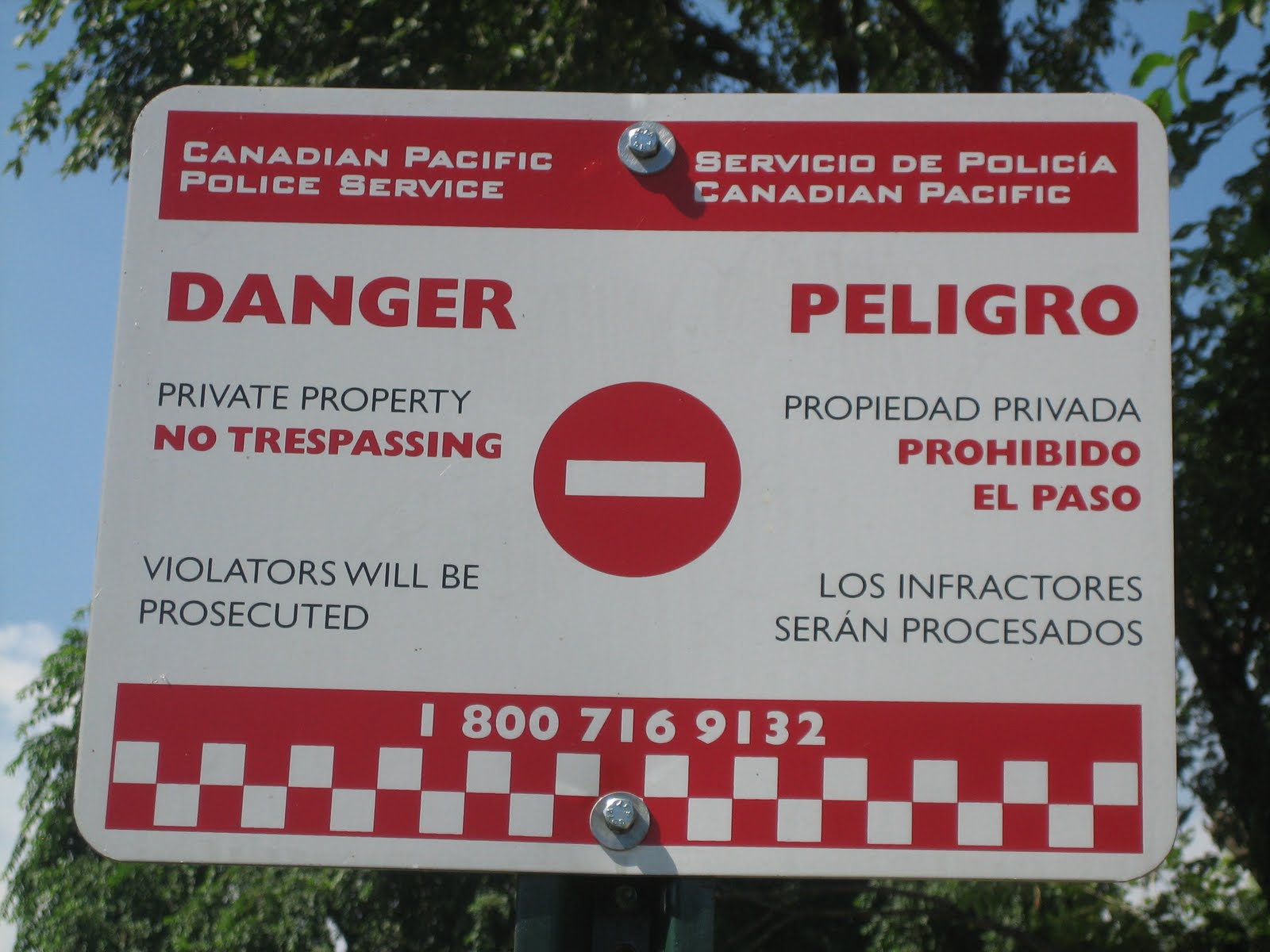
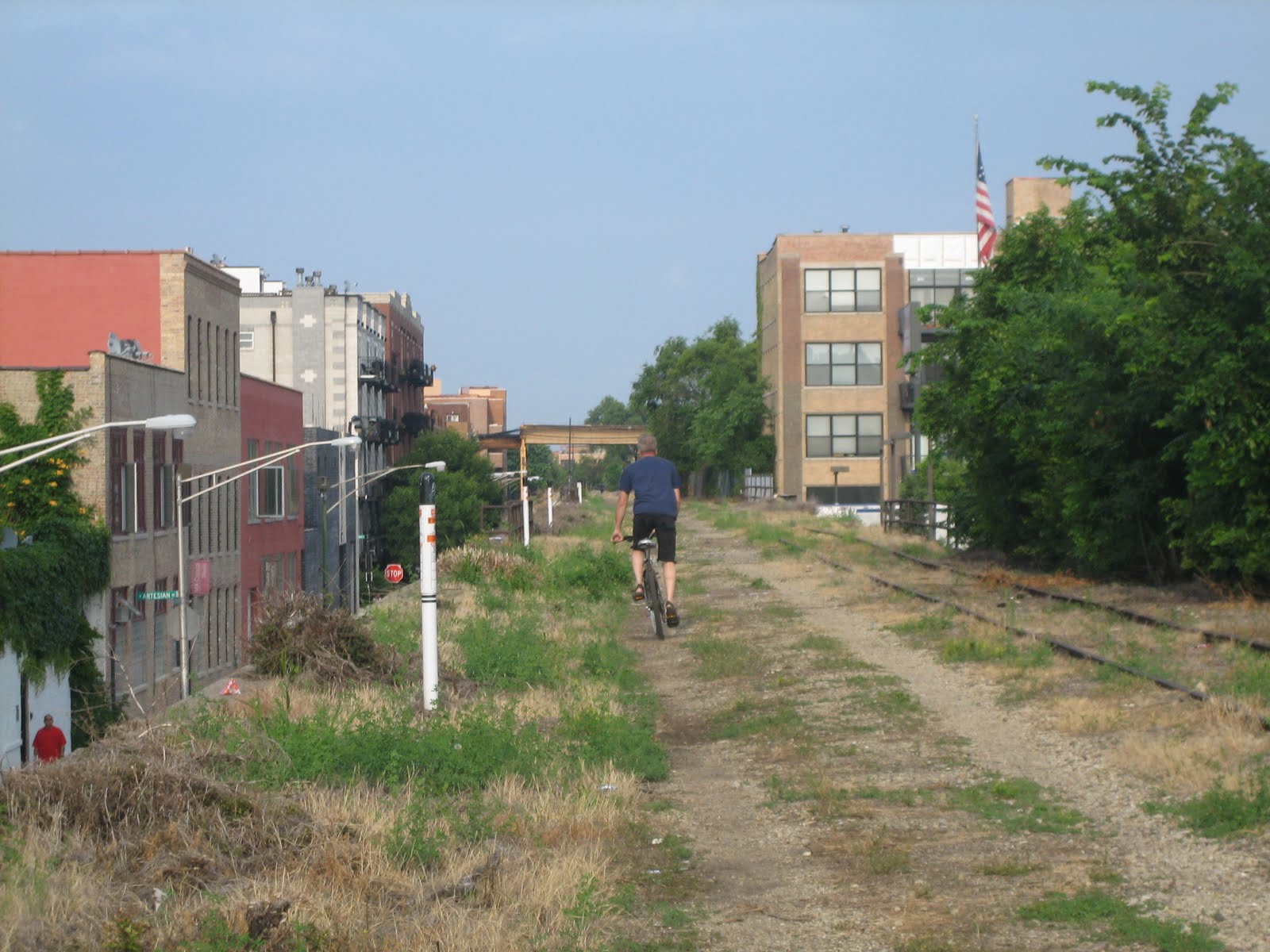
On a weekday morning in October, in gorgeous Indian summer weather, I rode my bicycle on top of the Bloomingdale line, the dormant railroad right-of-way that runs 2.7 miles across the northwest side from Logan Square and Humboldt Park to Wicker Park and Bucktown. I hauled my cruiser up the elevated rail line's embankment, accessing it from the south side of the parking lot of the McCormick Tribune YMCA, at 1834 N. Lawndale, near the western end of the line. Heading east, trying not to think about all the broken glass under my tires, I came to one of the new signs posted at another easy access point at Albany Avenue. In English and Spanish it read:

DANGER
PRIVATE PROPERTY
NO TRESPASSING
VIOLATORS WILL BE PROSECUTED


Since 2004 the City of Chicago has been planning to convert the line, currently owned by the Canadian Pacific Railway, into a multiuse trail and "linear park," similar in concept to Manhattan's wildly popular High Line, which opened in June 2009. The Chicago Department of Transportation has secured $3.1 million in state and federal funds to pay for the preliminary design and engineering of the Bloomingdale Trail, and in July 2009 the city announced its choice of Arup, a London-based multinational firm, to do this work, which is expected to take 18 months.

At that time, CDOT spokesman Brian Steele told me that his department hoped to officially award the contract to Arup by the end of the year. "Once the contract is awarded, the contractor can start work right away," he said.

But more than sixteen months have elapsed since then, and the contract still hasn't been approved.

In summer 2009, for a Reader story, I spoke with Bucktown residents whose houses abut the line; they complained that trespassing on the tracks had soared since the city and advocacy groups began publicizing the trail conversion concept. This illegal traffic included daytime use by bicyclists, joggers, and dog walkers, but the line was also attracting squatters and vandals at night. Neighbors said their buildings had been tagged with graffiti, rocks had been thrown through their windows, and that there had been several break-ins.

Alderman Scott Waguespack of the 32nd Ward held a closed-door meeting that July about the crime issue with reps from other affected wards, Canadian Pacific, the 14th District police, CDOT, and trail advocacy groups. Later that month most of the same entities showed up for a public meeting with about 60 residents who demanded that the line be secured. Shortly afterward the city fenced off vacant lots by the line at Kimball and at Milwaukee and Leavitt. Canadian Pacific promised to install the no-trespassing signs and agreed to let residents install fences and shrubs along the right-of-way to protect their homes—though it didn't offer to pay for them.

A path up the embankment at Milwaukee and Leavitt used to be one of the most convenient access points. But on my recent ride I encountered new iron fencing here on the south side of the tracks.


It's still possible to climb around the east side of these bars, over a rickety guardrail, albeit with the risk of a 15-foot fall to the street below if the railing were to break loose. At the line's eastern end, at Ashland and the Kennedy Expressway, chain-link fencing has been installed on the north, east, and south sides of the right-of-way—but door-size holes have been cut in all three sides. It's fairly easy to scramble up to the line here from the sidewalk on the east side of Ashland.

The area under the expressway seems to be a combination shooting gallery and art gallery, littered with needles, bottles, and food containers, and lined with an impressive array of colorful graffiti.


There are images of R2D2 and a walrus in a fedora, plus messages like "R.I.P. King of Pop" and "Squatrs show some respect! — our spot." Next to a Magic Marker sketch of a 40-ouncer and a spilled beer can someone has written "Smoke crack all the time, rain or shine."


Canadian Pacific is eager to get rid of the property, which has become a liability that brings in no income—it has offered to sell it to the city for a dollar. But the city doesn't want to take responsibility for the line yet: CDOT's Steele says the right-of-way probably won't change hands until after the preliminary design work is done and the city has a better sense of the condition of the embankment and its 37 overpasses, so it can more accurately estimate the cost of building the trail. Most of the concerned parties agree the right-of-way will continue to be a haven for illegal activities until then.

Which will be when? Steele says his department completed its negotiations with Arup in March, after which the contract was sent to the city's Department of Procurement Services. Since then procurement has been gathering and reviewing supporting paperwork from the contractor. Shannon Andrews, spokeswoman for Procurement, says the contract "is in the final stages of being awarded."

Steele says it's not unusual for the finalizing of the contract to be taking this long, given its complexity and the fact that Arup hasn't worked with the city before, which meant more time was needed to prepare the paperwork. Asked about his earlier forecast that the contract would be awarded by the end of last year, Steele says, "Like all estimates, it was just that—an estimate."

Other city contracts seem to also be moving slowly these days, says John LaPlante, director of traffic engineering at T.Y. Lin, a firm that has worked on other Chicago multiuse path projects. LaPlante says several of his company's recent city contracts have taken as long as a year to process.

Progress has been made on the conversion in the meantime. In June the Park District approved a $450,000 grant to the Trust for Public Land, a national nonprofit, to coordinate the Bloomingdale Trail Civic Engagement and Stewardship Project, which will help raise public funding and private donations for the trail project and coordinate community participation over the next two years. The Trust for Public Land now estimates the trail will cost $60 million.

And the development of parks at future access points is under way. "We think of the trail as both the line and the access points, so from our perspective things are moving forward," says Ben Helphand, board president of Friends of the Bloomingdale Trail, which has been advocating for the project since 2003.

After the Trust for Public Land helped arrange for the $1.2 million purchase of four parcels of land for access points, in 2008 the city razed buildings at Leavitt and Milwaukee and at Albany. That fall a park opened between Albany and Whipple as a simple, sodded green space. This month the Park District began construction on a $500,000 project to relandscape it and install playground equipment, public art, benches, and lighting. The work should be done by summer 2011. In September the Logan Square Neighborhood Association unveiled a colorful new mural on the retaining wall on the other side of the embankment from the park, featuring a map of the Bloomingdale with images of people walking, running, and biking on the line.


Besides the park between Albany and Whipple, there will eventually be seven other Bloomingdale access points: at the McCormick Tribune Y; between Kimball and Spaulding; at Mozart; at Maplewood; at Milwaukee and Leavitt; at Churchill Field Park, on Damen; and at Walsh Park, on Ashland.

The new iron fencing at Milwaukee and Leavitt is a reminder that some neighbors are still worried about security. This year Don Perini, owner of metal fabricator and erector Perini Ironworks, installed the bars at his own expense as well as the chain-link fences at Ashland, which he says were cut two days later. Perini, who lives next to the line in Bucktown, says he's had two of his window screens broken. "There are vagrants walking up there and people throwing things and lighting bonfires," he says. He'd like to see the line patrolled more often, but says the situation is better than it was last year: "The alderman [Waguespack] is doing a good job of monitoring it and getting the word out that it's private property."

Kerri Stojack, special assistant to Waguespack, credits the new fencing with reducing crime on the line. She says the ward office got about ten complaints last year about vandalism along the trail and has gotten fewer than five so far this year.

With the weather still unseasonably warm, I took another spin down the Bloomingdale at twilight earlier this month. Just west of California, on the middle of the rail bed, someone had set up a living room scene: ragged armchair, straight-back wooden chair, bookcase, and VCR atop a cabinet, all on an area rug.


Further east, near Marshfield—above Walsh Park—I came across a couple of tents sheltered by a tarp tied to trees. Two long-haired bearded men were leaving the tents. They said they'd been hanging out on the line for years. "A lot of people know we're here and we don't cause no trouble," the taller man said.

Wednesday, June 1, 2011

The Bloomingdale: Oasis or Devil's Playground?


Despite easy access and great publicity, the 2.7-mile stretch of abandoned rail bed isn't slated to open as a park till at least 2016. Whose job is it to secure it until then?

by John Greenfield

[This article also ran in the Chicago Reader, www.chicagoreader.com.]

On a recent Wednesday evening, with hours of summer daylight left, dozens of people were out enjoying the Bloomingdale line, a dormant railroad right-of-way that runs 2.7 miles across the northwest side, 15 feet above its namesake street. They strolled, they jogged, they cycled, and they exercised their dogs, oblivious not only to the carpet of glass, weeds, and garbage but to the law: the Bloomingdale line is private property, and everyone on it was trespassing.

Of course not all trespassers are created equal. "During the day joggers and bicyclists are fine," says Bucktown resident Joan Fox, whose house abuts the line. "But when the sun goes down the violence goes up."

Fox and her neighbors say traffic on the line, both harmless and not, has skyrocketed since the city and advocacy groups began promoting its conversion into the Bloomingdale Trail, a long, skinny 12-acre park. "Until this year there were a handful of people up there a week," she says. "Now it's more like 50 people a day."

Bike wheel left on Bloomingdale line

So who's responsible for keeping them out? The right-of-way still belongs to Canadian Pacific Railway, but the railroad has agreed to sell it to the city for a dollar and is eager to seal the deal. Chicago Department of Transportation spokesman Brian Steele, however, says the city probably won't take possession until a preliminary design process is completed, more than 18 months from now. Meanwhile, trail security has become a hot potato.

The idea for the conversion was first documented in a 1997 update of the Chicago Metropolitan Agency for Planning's regional trails plan, which noted the line's potential as a greenway. The last train came through in 2000, and in 2002 the city began planning an elevated multiuse trail to run from Ashland to Ridgeway (three blocks west of Central Park), connecting Bucktown, Wicker Park, Humboldt Park, and Logan Square. In 2003 advocates formed Friends of the Bloomingdale Trail to promote the concept and prevent the railroad embankment from being leveled and the land sold to developers. The following year the Chicago Plan Commission approved the trail as part of a plan to remedy the shortage of open space in Logan Square, which has the city's second-worst parkland-to-people ratio.

Soon after that, the national nonprofit Trust for Public Land came on board to help manage the project and facilitate the purchase of four parcels of land for trail access points, at a cost of $1.2 million. In 2008 buildings were razed at Milwaukee and Leavitt and at Albany, making it easy to walk up the embankment at Leavitt and clearing space for the half-acre Albany/Whipple Park, which opened last fall near an existing trail up to the rail bed.

CAPS meeting at Albany/Whipple park this summer

Although the abandoned line has seen its share of visitors in the past decade—from partying gang members to homeless people searching for a place to sleep—Friends of the Bloomingdale Trail board president Ben Helphand admits these recent developments, along with awareness-raising events like "Walk/Bike/Run the Bloomingdale Trail" in late June, have encouraged new waves of residents to "venture up there."

In November 2008, the city issued a request for proposals for the preliminary design and engineering for the trail. According to CDOT's Brian Steele, 23 firms applied and five were selected for further screening. In mid-July the city announced its choice: Arup, a London-based multinational firm whose projects include the Sydney Opera House, the "Water Cube" aquatics center for the Beijing Olympics, and the LEED Platinum-certified California Academy of Sciences in San Francisco. Arup's nine subconsultants would include Chicago's Ross Barney Architects, which worked on the Wacker Drive reconstruction and Chicago Riverwalk, and Brooklyn's Michael Van Valkenburgh Associates, a landscape design firm that worked on New York's High Line, a park similar in concept to the Bloomingdale Trail.

CDOT has secured about $3 million in state and federal Congestion Mitigation and Air Quality Improvement funds lined up for the design process, which Steele says will include significant community input via charettes organized by CDOT and the Trust for Public Land. Steele says it's premature to estimate construction costs, but Andrew Vesselinovitch, Chicago urban parks director at the Trust for Public Land, puts the figure at around $70 million. Helphand's hoping for completion by 2016—just in time for the Olympics, should Chicago win its bid for the games.

The Bloomingdale Trail is often compared to the high-profile High Line, which in June opened a half-mile stretch of its planned 1.5-mile conversion of an old elevated rail line on Manhattan's lower west side. The new space features native plants and shade trees, sleek surfaces, an undulating planked walkway, and lots of seating, including reclining wooden deck chairs for contemplating the unique city views. It's already had half a million visitors.

It came into existence relatively quickly: the Friends of the High Line began lobbying for the conversion in 1999, and construction began in 2006. Still, Helphand says he's satisfied with Chicago's progress. "The High Line and the Bloomingdale are very different beasts," he adds. "You think Bucktown's a wealthy neighborhood? Go to Chelsea." Fashion designer Diane von Furstenberg and her husband, media mogul Barry Diller, alone donated $15 million to the $150 million project. "And remember, our trail is twice as long. As far as I know it will be the world's longest elevated greenway."

In the meantime, though, it's a liability for whoever has to keep it secure. Canadian Pacific has its own security people, who you'll occasionally see driving SUVs along the rail bed, but at a recent public meeting a rail cop said they have only five officers covering three states.

John Escalante, who came on in June as commander of the 14th District, says the police don't generally arrest trespassers on the line—though they will detain suspected gang members and contact Canadian Pacific to see if they want to press charges. (The district is apparently pretty busy this year; on August 3 the Sun-Times reported that it's experienced double-digit percentage increases in murders, robberies, and assaults and batteries with weapons.)

"The biggest problem is the public perception that there is a trail here when there isn't," says Canadian Pacific spokesman Jeff Johnson. "It's a rail line. Anyone who's up there, whether they're walking, jogging, or doing vandalism, is trespassing."


Joan Fox says her house, which comes as close as two inches to the trail, has been hit by rocks and Roman candles fired from the trail, and taggers have defaced the back wall three times this year, leaving graffiti below her three-year-old son's window. "That makes me really nervous," she says. A group of eight or nine "squatters" often camps out near the house, she says, smoking, drinking, and playing music, although she doesn't think they're to blame for the vandalism. "They urinate by my son's bedroom window and I can hear them snoring," she says. "I call the police and they're usually very responsive but sometimes after an hour I have to go out at 10 PM and ask them to move. They've been cool about it but it could have been a lot worse."

Fox and her husband, Rodney Mann, recently put in a privacy fence and a security camera and will be installing bars on their son's window. She also got permission from Canadian Pacific to add barbed wire to the top of an existing chain-link fence at her own expense, but has opted not to spend the money. "I don't understand why either the city or the railroad can't secure this," she says. "It's not my property. I don't want to spend a whole lot more on this."


One of Fox's neighbors, who didn't want her name used, says she had a baseball smash through a plate glass window from the trail and had to replace it at a cost of $800. Another neighbor, also speaking on condition of anonymity, says young men hanging out on the line have dropped rocks on her kids playing in the alley below. In June and July, Fox and her neighbors say, there were three break-ins in homes abutting the Bloomingdale line within a two-block stretch near the intersection of Hoyne and Churchill; in mid-July burglars broke into a home while the residents slept, stole a wallet and keys, and then drove off in their car.

Escalante says he vaguely remembers that incident but doesn't think there's much evidence that people are using the trail to break into houses. "There doesn't seem to be an inordinate amount of burglaries happening along the Bloomingdale line," he says.

The development of trails like the proposed Bloomingdale project, notes a FAQ on the Friends of the Bloomingdale Trail site, "has actually reduced crime. The use of lighting, guardrails, webcams, bicycle police, and emergency telephones will ensure safety." Fox and her neighbors believe it, but want a solution for the interim. "It will be safer when the trail is finished, but it was also safer two years ago when no one was up there," says Fox. "I'm wondering what we're going to do in the next seven years before it's built."


Fox says she and about 15 neighbors sent a letter to 32nd Ward alderman Scott Waguespack on May 31 requesting action to secure the Bloomingdale line. On July 7 Waguespack held a closed meeting to discuss the issue with representatives from other affected wards, the railroad, the 14th District police, CDOT, Friends of the Bloomingdale Trail, and the Trust for Public Land.

"I've supported the trail from day one," says Waguespack. "But we're getting a ton of people up on the line. Someone even bolted a nice wooden ladder to a wall at Ashland near Walsh Park." (Last week pieces of a steep wooden staircase remained bolted to the wall, but a pile of lumber was on the ground. On one of the boards someone had written in Sharpie, "Seriously, please don't take this!?! We are trying to make this a public access way. Don't take it!")


At the July 7 meeting, says Jeff Johnson, a representative of Canadian Pacific said the railroad could tear up the tracks and grade the rail bed in the near future to create a simple dirt path. The city has rejected the idea. In an e-mail to 35th Ward alderman Rey Colón, CDOT's Brian Steele explained: "The Canadian Pacific, wanting to rush the City into relieving it of its responsibilities to maintain a facility it and predecessor railroads used commercially for decades, made a vague suggestion at a recent meeting that they would 'throw a strip of asphalt up there,' not including any necessary structural repairs, railings, ADA compliant access ramps, bridge reconstruction, lighting, protection for adjacent landowners, or environmental remediation.

"Such a facility would be unsafe, fail the Park District's land acquisition standards, and be unsustainable as it would leave the City with immediate repairs and no resources to maintain 37 bridges and 37 embankment segments that are nearly a century old. It was not a serious or acceptable offer, nor does the city's rejection reflect anything more than properly serving the public interest as it pursues this project with the goal of achieving the best long-term results."

On July 28, to address rumors about the offer, Colón posted a statement based on
Steele's e-mail on a Logan Square community forum. Of all the projects recommended by the Logan Square Open Space Plan, he added, "the Bloomingdale Trail is the grandest, most compelling and due to its magnitude, the most costly. It is going to take time."

Colón did tell me a week later that he's interested in cheaper, quicker ways to build the trail than the current projections allow. "I'm not an engineer but I do see people using the line right now," he said. "I'd like to know, could we start with ten million dollars and get the trail up to an acceptable level of safety and then sort of pay as we go to improve it?" He also told me he and Waguespack discussed this possibility while cycling together on the boulevards during the Active Transportation Alliance's Open Streets event on August 1.

On July 23, Waguespack hosted a public meeting on security at the Bucktown-Wicker Park Library. Helphand and TPL's Andrew Vesselinovitch made a presentation on the conversion plans. Raymond Valadez, chief of staff for First Ward alderman Manny Flores, attended, as did Escalante, a few other Chicago police officers, and some Canadian Pacific rail cops. About 60 Bucktown residents showed up, and most seemed fired up about trail-related crime. Photos were circulated: pictures of an encampment, the staircase at Ashland, cases and cans of beer, and even the half-burned corpse of an upright piano.


During the Q & A one man demanded, "All of you who are promoting the trail as such a great thing need to step up and secure this." Another suggested the possibility of tearing down the rail line and building an at-grade path: "It'd be safer and cheaper." A third suggested the residents pool their money to install secure fencing along the trail, or else consider filing a lawsuit against Canadian Pacific. "The railroad's weighing the consequences of having to spend money on security versus the cost of [potential] litigation," responded Waguespack.

"That was productive," said the alderman the next day. "We got a sense of what the residents of the ward would like to see and I think we're all on the same page. They've accepted that the trail is going to open but they want to see it secured."
In early August, according to Waguespack's chief of staff, Paul Sajovec, the city fenced off vacant lots at Kimball and at Milwaukee and Leavitt, making access more difficult. "There was a big run-around from various city departments about who was going to step up and put in the fence," he adds. "The city owns the lot, so it's their responsibility to secure it."

The lot on the east side of Milwaukee north of the line is indeed fenced, with green tarp (already defaced) on it to block the view and a locked gate. But on the south side of the line, there's a door-size gap between the end of a wrought-iron fence and the beginning of a concrete wall, and beyond that a path leading up the embankment. The small piece of property on the south side of the line still belongs to the railroad, according to Vesselinovitch.

In the wee hours of August 11, several bicycles, including a chopper with a mutilated Barbie tied onto its elongated fork, were locked to the fence and nearby sign poles, and several twentysomethings were walking down the path, carrying fixed-gear bikes and doing an a cappella rendition of Neil Young's "Only Love Can Break Your Heart."


I could hear more voices coming from the rail line, so I clambered up to investigate. Two young women and a young man were drinking cans of High Life and the women were playfully chucking rocks at each other. I asked if I could interview them for the story and they agreed to speak anonymously. I asked if they knew it was illegal to be there, and they said they did. The women soon wandered off, but the guy, who was wearing cutoffs and a T-shirt featuring the face of Bob Ross, host of public TV's The Joy of Painting, said he and his friends often came up to party and have never had any trouble from the police.

"A couple weeks ago there were about 15 of us up here and we heard a scream," he said. "A cop showed up and said someone got their purse snatched nearby and asked if we saw anybody. He was pretty chill. I think he realized we were just hanging out and not causing any trouble."

Although he occasionally encounters "assholes" on the line, he said, he enjoys using the Bloomingdale line in its primitive state. "I kind of like that it's not a trail yet. It's nice to have a part of the city where you can drink out in the open without worrying about getting busted."

As if to prove his point, as we walked together back down to the street, two police officers were confronting three men who had been drinking on the sidewalk, ordering them to pour out their beers. When two of the men, one of them a small guy with gray hair and beard, protested and cursed at the cops, the officers pushed them against the fence and forced them to empty their bottles over the side.

As the third man retreated across the street, the first two struggled and kept swearing. The officers handcuffed them to the fence. When the gray-haired one ignored an order to "sit your ass down," the officers hit him repeatedly on the legs with their night sticks.

By the time I rode off, at 1 AM, eight police vehicles, including a paddy wagon, had appeared. All three of the men were loaded into the wagon as a small crowd of officers stood on the sidewalk chatting. The three young people I had talked to on the rail line sat on the parkway, watching in silence.

Waguespack and Manny Flores both say fences probably won't keep out the trespassers neighbors are most concerned about. "The rail line has already been used by runners, walkers, and bicyclists for a long time," Flores says. "I don't think that trying to seal it off to all users is necessarily going to be the right answer. If someone wants to use the trail for nefarious purposes, they're going to figure out some way to get around whatever barriers you put up there."


The onus for securing the line is on Canadian Pacific because it owns the land, he adds. "But the city, and the nonprofits and community organizations, and the residents that are promoting the idea of a trail, also bear some responsibility," he says. "We're all going to have to work together to improve safety."

Helphand says his organization is adding messages on its Web site and in future dispatches that say trespassing on the line could harm efforts to build the trail, but advocates for "common sense" solutions like warning signs, better fencing at access points, and more enforcement by the Canadian Pacific security force and the police.

"The way I see it, everyone has the same objective, to turn the Bloomingdale line into a trail," says Paul Sajovec, "but we have an open-ended time frame. Some constituents who are having to deal with the hassle of having it be a no-man's-land right now would like to see it razed. Canadian Pacific has over 1,700 miles of track in Chicagoland and only five people to patrol it. They're being asked to provide security for a property that's actually a drain on their bottom line. Other than liability they don't have much of an incentive to secure the trail right now."

Shortly after the July 23 meeting, Canadian Pacific's Jeff Johnson promised Waguespack's chief of staff that the railroad would install private-property signs along the Bloomingdale line and committed to securing legal grants of access for property owners to install barriers, like fences and shrubs, on Canadian Pacific property—at their own expense. "We're willing to work with them on this," he says.
Friday, December 3, 2010

Why Chicago is falling behind other bike towns

CDOT Commissioner Bobby Ware speaks at the Bike to Work rally

By John Greenfield

[This piece also runs in this week's Newcity, www.newcity.com.]

Don’t get me wrong – Chicago’s already a terrific place to ride a bicycle. It’s flat, with a bike-friendly street grid and a scenic, 18.5-mile Lakefront Trail. Since the early ‘90s, the City of Chicago has spent $100 million to push pedaling, striping over 110 miles of bike lanes, installing more than 12,000 bike parking racks, and educating tens of thousands people about safe cycling via Mayor Daley’s Bicycling Ambassadors. Cyclists have access to buses and trains, we’ve got a fancy bike station in Millennium Park, and the list goes on.


But when Newcity asked me, a former Active Transportation Alliance staffer and consultant to the Chicago Department of Transportation’s (CDOT) Bicycle Program, for my take on the current state of bike culture in Chicago, one word sprang to mind: stagnant.

On some levels things are going great. Since changing its name from the Chicagoland Bicycle Federation, Active Trans has been doing yeoman’s work building a coalition of biking, walking and transit interests. This has helped double the organization’s budget and staff size, increasing its clout to promote healthy, environmentally-friendly travel.

We now have four community bike centers spread from Woodlawn to Rogers Park, most teaching bike handling and mechanical skills to inner-city youth and selling refurbished rides to residents for cheap, green transportation. Three of these co-ops have expanded to larger digs in the last year or so.

Students and staff at Blackstone Bicycle Works in Woodlawn

There are now three Euro-style bicycle shops selling stylish, practical city bikes and cargo cycles, plus a gaggle of other new stores serving the ever-expanding ranks of daily commuters. After all, CDOT says bike traffic has quadrupled on Milwaukee Avenue over the last six years.

The Chainlink, a social networking site for Chicago cyclists, has ballooned to almost 4,000 members in just two years. There are now a multitude of two-wheeled subcultures in this city, some of which I’ve probably never even heard of. Why, only yesterday I heard the term “Tarck-ing” (fixed-gear, freestyle trick riding) for the first time.

But lately CDOT and other City agencies have been spinning their wheels when it comes to making bicycling safer, more convenient and fun through innovative bike facilities and programming. To paraphrase Daniel Burnham, they’ve been making little plans that have no magic to stir cyclists’ blood.

I’m not the only one who thinks so. Executive Director Rob Sadowsky recently resigned from Active Trans to take the reigns of the Bicycle Transportation Alliance in bike-crazy Portland, OR. Since Active Trans gets much of its funding from consulting contracts with CDOT, the nonprofit tends to be muted in its criticism of City Hall. Freed from this constraint. Sadowsky fired a parting shot in a recent Sun Times interview:

"Chicago was leading the way for a long while in cycling," Sadowsky said. "Things have been happening in other cities, like Minneapolis and New York, that really made strides we're not even coming close to. Part of that is a strong presence from the Department of Transportation's commissioner level and strong backing from the mayor. We're kind of lacking that in the city right now."

This current leadership vacuum was apparent at this year’s lackluster Bike to Work Rally. Mayor Daley, who usually shows up to give an enthusiastic if somewhat cryptic speech at the annual rally, was conspicuous by his absence.

Mayor Daley at a previous Bike to Work Day rally

CDOT Commissioner Bobby Ware, subbing for the mayor, seemed to know little about his agency’s bike projects. He spoke with his nose in his notes, referred to the City’s Bike 2015 Plan blueprint for cycling as the “2010 Plan,” and mangled the name of a Bicycle Program staffer who accepted an award on behalf of the program.

In fairness, Ware’s only been on the job for a month. But the fact that CDOT has had five commissioners in six years, for reasons known only to Mayor Daley, has slowed the pace of bicycle planning. Each new commish has to be brought up to speed on cycling issues, and this wastes precious time.

Another speed bump to better bike facilities and events has been the City’s reluctance to put some skin in the game. Daley, rumored to be a cyclist himself, is often cited as the U.S. mayor who is most outspoken in support of biking. And as a powerful politician, his lip service is in fact crucial for motivating bureaucrats to support bicycle projects.

But like our under-funded transit system, bicycling gets almost no money from the City budget. Virtually all of the cash CDOT spends on bike initiatives comes from federal and state funds, often through federal Congestion Mitigation and Air Quality grants which come from a tax on gasoline.

This stinginess makes it harder to pull off bold schemes like the “ciclovia,” an event that shuts down several miles of streets to cars, creating safe places to bike, walk and socialize. Active Trans first proposed bringing this Latin American concept to Chicago in the early 2000s, well before other U.S. cities were talking about it. But City Hall’s insistence on a heavy police presence and reluctance to foot the bill delayed the program for years while Active Trans struggled to raise the necessary funds.

Chicago's "Open Streets" ciclovia

The ciclovia finally debuted in 2008 as “Sunday Parkways” with events on two different 3.5-mile courses on Sundays in the fall. In 2009 it was consolidated to one 7-mile summer Saturday event, called “Open Streets.” After these modest successes the program fizzled out due to the difficulty of funding it - there will be no major events in Chicago in 2010. Meanwhile, city-funded ciclovias have flourished in other cities. New York is staging three this year, Portland, OR, is staging five, and San Francisco is staging nine.

San Francisco's "Sunday Streets" ciclovia

Chicago used to be the poster child for big-city bike improvements. A few years ago, New York’s Transportation Alternatives advocacy group liked to use the Second City’s successes to shame the then-sluggish New York DOT into action. But things changed in 2007 when New York got a dynamic, bike-friendly new transportation commissioner, Janette Sadik-Khan. In recent years Chicago has fallen behind New York and many other cities in several aspects of promoting cycling.

Chicago has installed more bike racks than any other U.S. city. But last year the City began uprooting most of Chicago's parking meters to make way for pay-and-display units, eliminating tens of thousands of de facto bike parking spots. Meanwhile, CDOT has not installed any new bike racks for months and will not be doing so anytime soon, due to installation contract delays.

Bikes crowded on racks and poles in Logan Square after meter removal

On-street bike parking, where a single car parking space is filled with racks to accommodate a dozen cycles, reducing sidewalk clutter and advertising the space efficiency of bikes, is beginning to be commonplace in Portland, OR, and San Francisco. Although Andersonville’s Cheetah Gym, with the blessing of the local chamber of commerce, asked for on-street racks several years ago, CDOT passed on this opportunity, citing concerns about safety. Chicago still hasn’t tried on-street bike parking.

On-street bike parking in Portland, OR

Millennium Park’s $3 million, state-of-the-art bike station opened to fanfare in 2004, but the facility is too far east to be of much use to most Loop commuters. The Bike 2015 Plan calls for building a second bike station in the West Loop, near Union Station and the Ogilvie Center, so that Metra commuters could pick up bikes to pedal to their offices. Although space was available to build the station in Metra’s new French Market, next to the Ogilvie Center, CDOT missed the boat on this opportunity as well.

Millennium Park's bike station

Separated bikeways, where cyclists are protected from cars by a curb or other physical barrier, are widespread in Europe and are becoming more common in U.S. cities. New York’s separated bike lane on 9th Avenue, for example, has been a hugely popular experiment, but Chicago has yet to try this idea.

Separated bike lane on 9th Avenue in New York City

Automated bike rental has been commonplace in Europe for years. Paris’ Velib system, with 20,000 bikes at rental kiosks all over town, is credited with doubling the mode share for cycling. Chicago has been talking about this idea for years and in 2007 Mayor Daley rode a Velib bike in Paris. But Washington D.C. beat us to the punch two years ago, Denver now has 500 automated rental bikes, and Minneapolis will be getting 1,000 this summer. Chicago is finally piloting a bike-share program this July, but once again we’re thinking small, with only 100 bikes in six Loop locations.

Denver's B-Cycle automated bike rental kiosks

But perhaps the most frustrating example of Chicago being the first to come up with a good idea for cycling but the last to implement it is the Bloomingdale Trail. As early as 1997 planners proposed turning the little-used Bloomingdale elevated rail line on the Near-Northwest Side into a multi-use path, in 1997, and the Chicago Plan Commission committed to the idea in 2004.

Although the rugged, now-abandoned rail bed is already getting plenty of illegal use from cyclists, joggers and squatters, the City seems to be dragging its heels on renovating the structure and opening it to the public. It’s unlikely to open until the end of this decade. Meanwhile, New York’s elegant High Line “vertical park,” a similar project that wasn’t officially proposed until 1999, debuted last year to huge acclaim – it’s already had millions of visitors.

Chicago's Bloomingdale Line

New York City's High Line

As a follower, not a leader, in all these different categories, it’s no wonder Chicago dropped in Bicycling magazine’s ranking of the best large U.S. cities for biking, from first place in 2001, to tenth place in 2010. It’s not that things are bad here, it’s just that more exciting stuff is happening more quickly elsewhere.

Active Trans will be hiring a new director soon, and it will be interesting to see if this person will can light a fire under CDOT and other departments to make some of the above projects happen sooner than later. But again, Active Trans can only push so hard, because the advocacy group depends on the City for consulting dollars.

Unlike in liberal, temperate West-Coast cities where bicycling has long been popular and politicians have responded to demands from the public for better bike facilities, cycling in Chicago has traditionally been a “top-down” affair. Under Daley, the City has installed paths, lanes and racks in an effort to coax people out of their cars.

But now that Chicago cycling has gained momentum while CDOT’s bike initiatives have lost steam, it’s time for a “bottom-up” approach. Citizens need to start pressuring City Hall to put the metal to the pedal.

It’s worked before. After seriously injuring herself when she wiped out on one of Chicago’s dangerous metal-grate bridges, in 2002 Kathy Schubert launched a letter-writing campaign demanding that the bridges be made safer for cyclists. The campaign infuriated then-CDOT Commissioner Miguel d’Escoto, but after receiving dozens of postcards, he ordered the Bicycle Program to start working on the problem. Eventually metal plates were installed on bridges at Wells and Cortland.

The Bike 2015 Plan, released in 2006, calls for the establishment of ten miles of “bike boulevards,” traffic-calmed, residential streets where cycling is encouraged because cars are forced to slow down, common in Portland, OR, Berkeley, CA, and other cities. Last fall Sarah Kaplan grew frustrated that little action had been taken on this proposal. She formed the grassroots group Bike Boulevards Now! to lobby the city to get moving on the idea. CDOT Bicycle Program Coordinator Ben Gomberg now says he’s hoping to establish Chicago’s first bike boulevard by 2011.

Bike boulevard in Berkeley, CA

If you want Chicago to remain a first-class bicycling town, contact your alderman, CDOT, or the Mayor’s Office to demand that the City starts implementing big plans for biking - now. Tell them you want immediate action on exciting projects like separated bikeways, on-street bike racks, a new bike station, a large-scale bike-share program, City-funded ciclovias and the Bloomingdale Trail. Or, better yet, form your own grassroots, recruit members via the Chainlink, and start organizing for change. It’s time to put the rubber on the road.